Reception: +353 1 556 7900 | Mon – Fri: 8am – 4pm | Sat & Sun: 9am – 12pm by appointment only
- Treatments & Services
- All Fertility Tests
- Fertility Tests
- Ultrasound Scanning
- Tubal Patency Check
- Hormone Blood Tests
- Semen Analysis
- Other Tests
- First Step Package
Fertility Treatments- All Fertility Treatments
- Follicle Tracking
- Ovulation Induction
- Intra-uterine insemination
- In Vitro Fertilization
- Frozen Embryo Transfer
- Intracytoplasmic Sperm Injection
- Surrogacy
Male Factor- All Male Factor Services
- Semen Analysis
- Sperm Freezing
- Advanced Techniques
- Surgical Sperm Retrieval
- microTESE
Donor ServicesFertility Preservation- All Fertility Preservation Services
- Egg Freezing
- Sperm Freezing
- Embryo Freezing
- Before or After Cancer
- Childhood and Adolescent Cancer Fertility Project
- Transgender Services
Fertility Tests
Our comprehensive range of tests allow us to determine the best treatment options for you.
Ultrasound Scanning
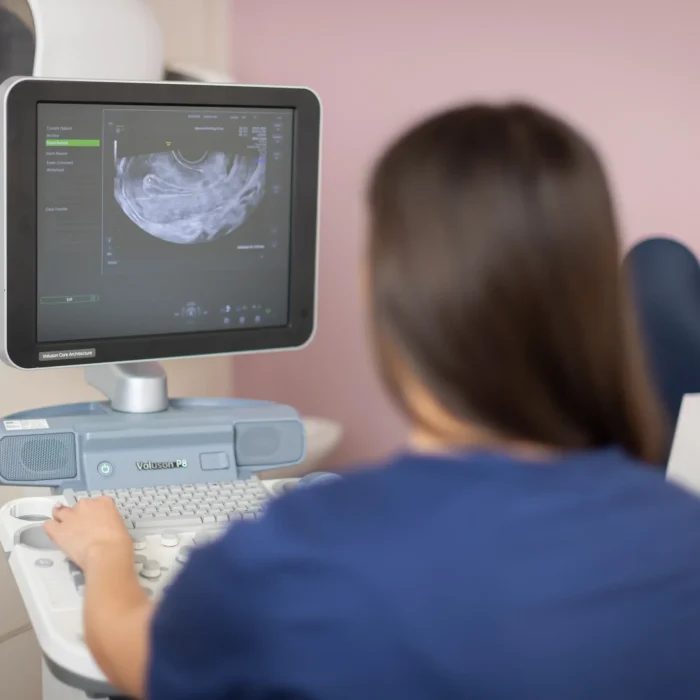
This transvaginal pelvic assessment scan gives us a lot of information about the uterus and ovaries. Ultrasound scan is used to check for cysts, fibroids, polycystic ovaries, endometriosis, polyps or swollen fallopian tubes (hydrosalpinx).
The scan also allows us to look for antral follicle count, an indicator of ovarian reserve i.e. how many eggs are left in the ovaries.

Tubal Patency Check
Tubal patency tests determine whether the fallopian tubes are open or blocked, and shows distortions of the uterine cavity caused by intrauterine anomalies, fibroids, polyps or adhesions.
This can assist with understanding causes of infertility as changes in the uterine cavity can influence the pregnancy and blocked tubes prevent pregnancy. If just one tube is blocked the chance for pregnancy is decreased.
With both possible methods of examining tubal patency, dye is injected into the uterine cavity. The main differences are:
Hysterosalpingo-Contrast-Sonography (HyCoSy) – is carried out using an ultrasound scanning machine and is carried out in Merrion Fertility Clinic
Hysterosalpingogram (HSG) – is carried out by a Radiographer and is generally done in the National Maternity Hospital
A HyCosy is generally the preferred recommendation when a tubal patency check is required.
Hormone Blood Tests
Female
Anti-Mullerian Hormone (AMH) blood test
The AMH test, in combination with your scan, is used to assess ovarian reserve. AMH blood levels are also helpful for diagnosing polycystic ovaries.
Rubella blood test
This blood test confirms Rubella immunity by measuring Rubella antibodies.
Male
FSH, LH, Prolactin and Testosterone
These tests may be carried out of significant abnormalities are found during semen analysis.
Semen Analysis
Factors measured during a semen analysis include:
- Volume: how much semen is present in one ejaculation
- Sperm count: number of sperm present per millilitre of semen in one ejaculation
- Sperm morphology: percentage of sperm that have a normal shape
- Sperm motility: percentage of sperm that can move forward normally
We also check for anti-sperm antibodies and analyse the sperm to see which type of fertility treatment would be best, if needed.
Other Tests
Genetic testing
In men with very low sperm counts or no sperm in their semen, genetic testing may be required. This may include a general screen or karyotype, screening for the Cystic Fibrosis gene or screening for Y chromosome deletions.
Sperm DNA fragmentation Testing
This looks at the DNA carried by sperm to check if it is has become damaged or “fragmented”
First Step Fertility Check Package
Our First Step Fertility Check is aimed at people who are concerned about their fertility. At Merrion Fertility Clinic, we strongly believe in individualised care that is tailored to your particular situation.
What is included?
- Semen Analysis
- Ultrasound scan
- AMH Blood Test
- Rubella Blood Tests
- Consultation with a Fertility Specialist
Book a Consultation
If you are considering your fertility, why not book an online consult with one of our team of doctors?