Reception: +353 1 556 7900 | Mon – Fri: 8am – 4pm | Sat & Sun: 9am – 12pm by appointment only
- Treatments & Services
- All Fertility Tests
- Fertility Tests
- Ultrasound Scanning
- Tubal Patency Check
- Hormone Blood Tests
- Semen Analysis
- Other Tests
- First Step Package
Fertility Treatments- All Fertility Treatments
- Follicle Tracking
- Ovulation Induction
- Intra-uterine insemination
- In Vitro Fertilization
- Frozen Embryo Transfer
- Intracytoplasmic Sperm Injection
- Surrogacy
Male Factor- All Male Factor Services
- Semen Analysis
- Sperm Freezing
- Advanced Techniques
- Surgical Sperm Retrieval
- microTESE
Donor ServicesFertility Preservation- All Fertility Preservation Services
- Egg Freezing
- Sperm Freezing
- Embryo Freezing
- Before or After Cancer
- Childhood and Adolescent Cancer Fertility Project
- Transgender Services
Male Factor
Using cutting edge techniques to give our patients the best possible chance of success.
At Merrion Fertility Clinic, we are committed to supporting you on your fertility journey. Investigations and treatments focusing on male fertility are detailed here, outlining what we offer and how we can help.

Semen Analysis
Overview
When looking at male fertility, the starting point is a semen analysis. This test looks at the number of sperm in an ejaculated sample, how they move and their appearance. These factors are referred to as concentration, motility and morphology on test results. We also check for anti-sperm antibodies.
The results of this test will be reviewed by your doctor and discussed with you at your consultation.
What is involved?
Before a semen analysis, you will need to abstain from ejaculation for between 2-7 days. Once ejaculated, a semen sample should be analysed with an hour. To ensure the lab team have dedicated time to analyse your sample, you will need an appointment. The patient services team can help you make one at a time that works for you.
Your Appointment
At Merrion Fertility Clinic, we have two private rooms reserved where you can produce your sample. To achieve the most accurate test result, the sample needs to be produced by masturbation. If this is difficult for you, please speak to a member of our staff and we can discuss options to support you.
Additional tests to assess male fertility
Sperm DNA Fragmentation
The DNA carried by sperm can sometimes become damaged or “fragmented”. This test assesses that damage. While we do not recommend it for everyone, it can provide useful information, for example, if you have a history of unsuccessful treatment.
Genetic testing
In men with very low sperm counts or no sperm in their semen, genetic testing may be required. This may include a general screen or karyotype, screening for the Cystic Fibrosis gene or for Y chromosome deletions.
Hormone bloods
The hormones measured in men when investigating fertility are testosterone, FSH and LH. The levels of these hormones can give a better understanding of any underlying issues and help you decide what treatment is right for you.
Sperm Freezing
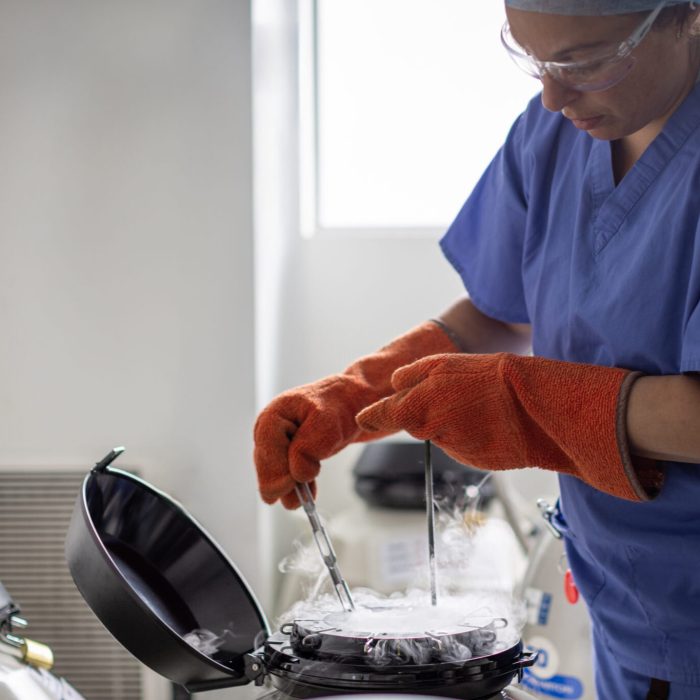
Sperm can be frozen and stored safely until needed for treatment. Sperm is collected, through masturbation or surgical retrieval, and frozen in straws. These straws are then stored using liquid nitrogen.
There are many reasons for freezing sperm, for example
- If the quality of a semen sample is diminished, sperm may be frozen and banked to ensure adequate sperm are available on the day of treatment.
- Sperm may be frozen if a patient has physical or psychological problems with producing a semen sample. Having frozen sperm in storage reduces the pressure to provide a sample on the day of treatment.
- Sperm may also be frozen before cancer treatment in order to preserve future fertility.
Advanced sperm selection techniques
ZyMōt
ZyMōt, a sperm separation technology, selects the highest quality, most motile sperm by mimicking the body’s natural selection process. Sperm that have been selected for treatment using a ZyMōt device have been shown to have lower levels of DNA fragmentation than other preparation methods. The device, called a chip, has two chambers separated by membranes. The sperm sample is placed in the first chamber, the membrane “traps” lower quality sperm while high quality sperm can swim through to the collecting chamber to be used in treatment.
PICSI
Physiological Intracytoplasmic Sperm Injection, (PICSI) is a type of ICSI, involving selection of sperm according to their ability to bind hyaluronan or hyaluronic acid (HA). Intracytoplasmic Sperm Injection, (ICSI) involves injecting a sperm into an egg. An embryologist selects the best sperm based on their morphology, how they look, and their motility, how they move. PICSI adds another selection criteria to this process, the ability to bind hyaluronan. Hyaluronan occurs naturally in the body and is found in the cells surrounding the egg. Sperm must bind hyaluronan to find their way through these cells to reach the egg and fertilise it. We can use this ability in PICSI as a way to select the same sperm that can successfully fertilise eggs in nature.
Surgical Sperm Retrieval (SSR)
SSR is a procedure used to take sperm directly from the testis or the epididymis. It is an umbrella term, covering a number of approaches to retrieving sperm from the testis including Testicular Sperm Aspiration (TESA) and Testicular Sperm Extraction (TESE).
At Merrion Fertility Clinic, SSR is performed with sedation and pain relief, provided by a Consultant Anaesthetist.
SSR is an option for men who have no sperm in their ejaculated semen, or who have had a failed vasectomy reversal. SSR may also be used for men with spinal injuries and where there are problems with ejaculation (e.g. MS or Diabetes).
The samples retrieved are processed by our embryology team and any functional sperm found are frozen for future use in an ICSI cycle. The number of sperm is generally small and the motility reduced, so ICSI (intracytoplasmic sperm injection) is needed to maximise the chance of fertilisation.
microTESE
A micro TESE is a specialist type of TESE using an operating microscope.
During a micro TESE, a doctor uses the operating microscope to closely examine the testis for areas that look most likely to produce sperm. Small sections of these areas can then be removed. An embryologist will examine them for the presence of sperm.
Once found, these sperm can be frozen for future use in an ICSI cycle.
We work with our Consultant Urology colleagues, Ms Aisling Looney, at St Vincent’s Private Hospital and Mr John Sullivan at the Beacon Hospital to provide this service.